with the rapid development of the internet, more and more companies and individuals are beginning to pay attention to server choices. against this background, the business of selling american servers has gradually emerged. however, many people still have questions about the legality and potential legal risks of this business. this article will provide you with an in-depth discussion on whether selling a u.s. server is legal and its related legal risks, helping you make smarter decisions when choosing a server.
a u.s. server refers to a server provided by a data center located in the u.s. this type of server is favored by users around the world for its high performance, stability and good network connection. in recent years, with the popularity of cloud computing and big data, the market demand for us servers has continued to grow. many businesses choose to host their websites or apps on u.s. servers to improve access speed and user experience. however, as the market expands, legal risks also increase, and companies need to be extra cautious when choosing and using us servers.
when exploring the legality of selling american servers, you must first understand the relevant legal framework. the us cyber laws mainly include the digital millennium copyright act (dmca), the communications code act (cda), and the electronic communications privacy act (ecpa). these laws have clear provisions on the storage, transmission and privacy protection of data. in addition, state laws may also have different requirements for data protection, privacy rights, etc. therefore, businesses selling u.s. servers must comply with all applicable laws and regulations to ensure the legitimacy of their business.
when selling us servers, data protection and privacy legal risks are important factors that cannot be ignored. at present, there is no unified data protection law in the united states, and states have different regulations on this aspect. for example, california’s california consumer privacy act (ccpa) has strict regulations on consumers’ privacy rights, and companies must follow relevant terms when processing user data. if a company fails to properly process user data as required by law, it may face huge fines and legal lawsuits, damaging the company's reputation. therefore, companies selling american servers should strengthen their learning and compliance with data protection laws to reduce legal risks.
another legal risk involved in selling us servers is cross-border data transmission. in the context of data globalization, many companies transmit user data from one country to another. however, differences in data protection laws between the united states and other countries may lead to legal challenges in cross-border data transmission. for example, the eu's general data protection regulation (gdpr) has strict restrictions on data transmission, and companies may face heavy penalties if they fail to comply with relevant regulations. therefore, companies selling american servers need to pay special attention to the legal requirements for cross-border data transmission to ensure data compliance.
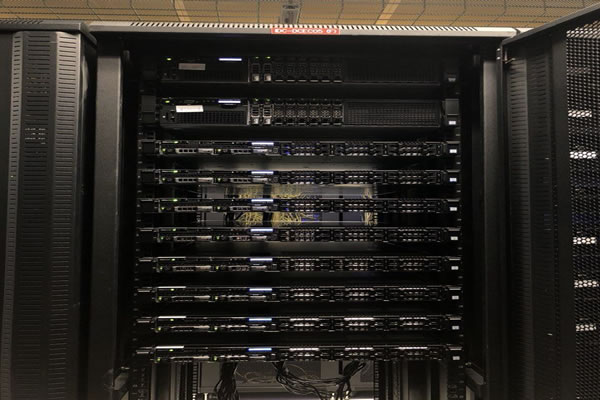
companies selling american servers also need to pay attention to intellectual property rights and content compliance issues. under the digital millennium copyright act, content hosted by server providers on their platforms must comply with copyright laws to avoid infringement of other people's intellectual property rights. if there is copyright infringement in the content stored or transmitted on the server, the company may be sued by the copyright holder, resulting in legal liability. therefore, it is recommended that companies selling us servers establish a sound content review mechanism to ensure the legitimacy of the hosted content.
cybersecurity is an important factor that must be considered when selling american servers. the u.s. government has put forward several requirements for cybersecurity, especially for companies involving sensitive data. in the case of frequent data breaches, enterprises may face legal liability and economic losses if they fail to take appropriate security measures. according to the "cybersecurity information sharing law", enterprises are obliged to report in a timely manner after a network security incident occurs. therefore, companies selling american servers should strengthen network security measures to ensure data security and reduce legal risks.
to reduce the legal risks of selling us servers, companies can adopt the following compliance advice and best practices: first, keep abreast of applicable laws and regulations in a timely manner to ensure the legality of business operations. secondly, establish a complete data protection mechanism to ensure the security and privacy of user data. again, formulate strict content review procedures to avoid infringement of intellectual property rights. finally, strengthen network security protection to ensure the security of servers and data. through these measures, enterprises can effectively reduce legal risks and achieve compliant operations.
overall, the legality and legal risk issues of selling american servers are a complex and multi-level topic. when choosing and operating us servers, enterprises must fully understand relevant laws and regulations, take effective compliance measures, and reduce legal risks. as the legal environment continues to change, companies should maintain attention to legal dynamics and flexibly adjust their business strategies to adapt to new legal requirements. in the future, compliant operations will become an important factor for enterprises to gain competitive advantages.
- Latest articles
- malaysia vps latency test and node selection practical guide
- comparative analysis of the differences and advantages between alibaba cloud malaysia servers and other regional services
- comparative analysis of the process of activating vps with korean native ip and purchasing it directly from the operator
- how to safely open port 81 of the korean server for external services and intranet services to balance the risks
- conoha singapore cn2 server rapid deployment and environment configuration for developers
- which taiwanese cloud server is best for cross-border network optimization suggestions for mainland users?
- akiko yajima (japan server) backup and recovery strategy and off-site disaster recovery implementation suggestions
- how can companies reduce the probability of being inspected and compliance costs in hong kong computer rooms through systems?
- Popular tags
-

Market trends and prospects for high-hard protection against US server rental
Explore the market trends and prospects of high-hard protection against US server rental, analyze its importance and future development in network security. -

from an operational perspective, discuss which us multi-ip server or station group is better and more conducive to expansion?
from an operational perspective, we compare the pros and cons of multi-ip servers and site groups in the united states in terms of scalability, seo risks, management costs, and geographical positioning, and provide executable suggestions and best practices. -

analysis of the potential consequences and impact of the shutdown of root servers in the united states
this article provides an in-depth analysis of the potential consequences and impacts of the shutdown of root servers in the united states, including the impact on internet stability, security, and global network structure.